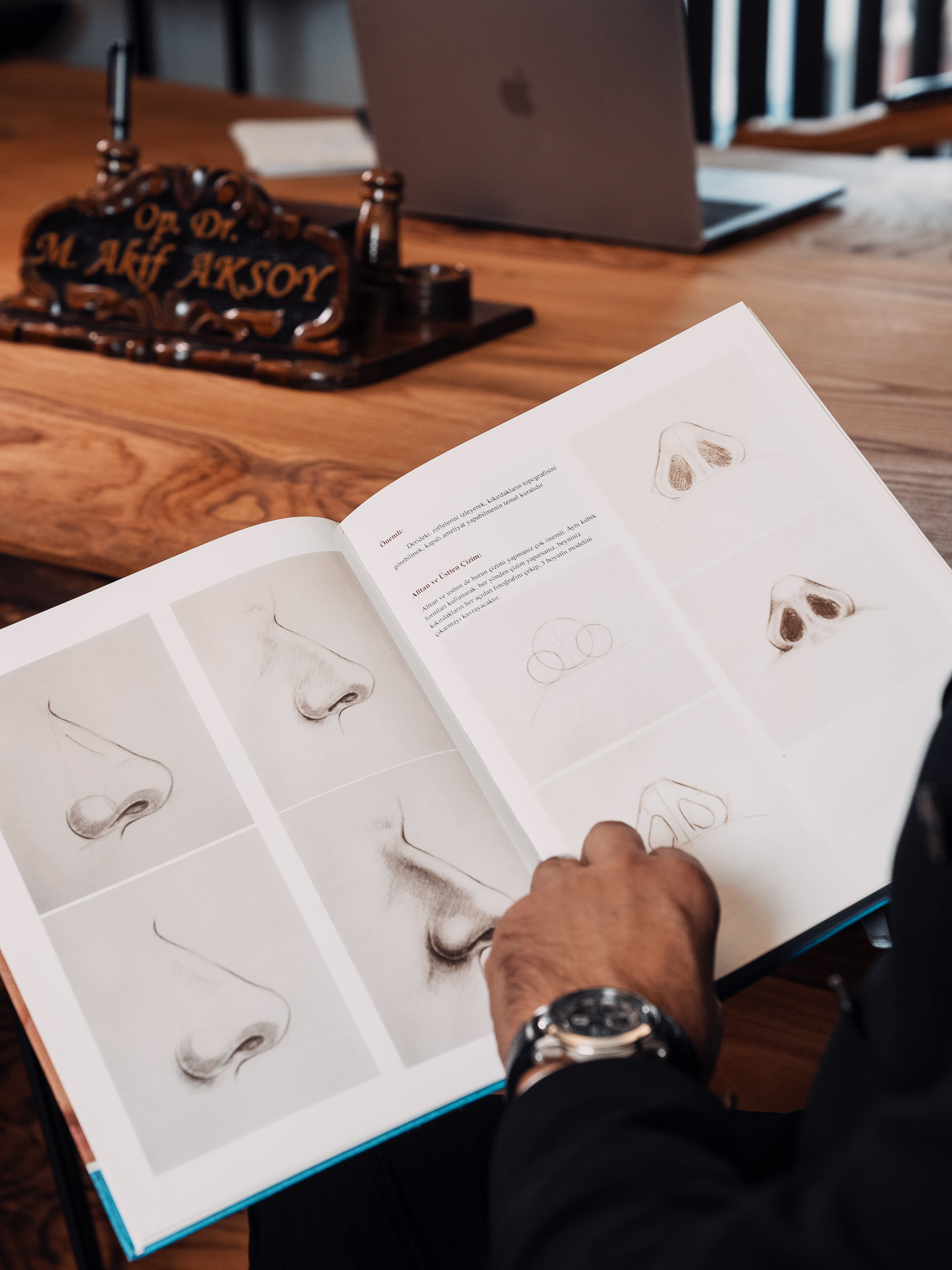

In rhinoplasty the words "open" and "closed" describe not the size of the operation but where the surgeon reaches the skeleton of the nose from. In the closed technique every incision lies inside the nostrils; nothing is cut on the outside.
This page explains what the closed technique offers, which noses it suits, and where its limits begin. For the general framework, see the rhinoplasty page.
What is the closed technique?
In endonasal (closed) rhinoplasty the surgeon reaches the bony and cartilaginous framework through incisions on the inner surface of the nostrils. The skin of the tip is not lifted completely; the tissues are separated as tunnels and the shaping is done through that limited access.
| Feature | Closed technique |
|---|---|
| Incisions | Inside the nostrils (marginal and intercartilaginous) |
| Columella (skin between the nostrils) | Not cut |
| Tip skin | Not fully elevated |
| View | Indirect and limited |
| What the surgeon relies on | Tactile feedback and anatomical experience |
Who is it suitable for?
Situations in which the closed technique comes to the fore:
- Noses where dorsal (hump) correction predominates — when no major change is needed at the tip
- Noses whose tip is already balanced
- Patients who want measured, limited change
- Noses not previously operated on, with symmetry largely preserved
- Patients particularly concerned about a columellar scar
The situations in which it is not suitable are equally clear:
- Severely deviated (fractured or S-shaped) noses
- Marked tip asymmetry or complex tip deformity
- Extensive cases requiring rib or ear cartilage grafts
- Previously operated noses with scarred, adherent tissue — see revision rhinoplasty
How is the operation performed?
Closed rhinoplasty is carried out under general anaesthesia and usually takes 1.5–2.5 hours.
- Making the incisions — on the inner surface of the nostrils, not extending outside
- Reaching the framework — separating skin and soft tissue from the bony and cartilaginous skeleton
- Dorsal adjustment — hump reduction or lowering the dorsum by a preservation method
- Osteotomies — repositioning the nasal bones
- Shaping the tip — mostly with suture techniques
- Septal and turbinate work where required
- Closure and splinting
When airway work is carried out in the same session, the operation is called septorhinoplasty.
How does it differ from the open technique?
A recent systematic review and meta-analysis comparing open and closed approaches reports that the two are broadly similar in patient-reported outcomes, and that the difference lies mainly in surgical access and the course of swelling.
| Closed technique | Open technique | |
|---|---|---|
| Columellar incision | None | Present (small, fades over time) |
| View | Limited, indirect | Direct and wide |
| Detailed tip work | Limited | Extensive scope |
| Graft placement | Difficult, limited | Controlled and straightforward |
| Duration of tip swelling | Usually shorter | Usually longer |
| Temporary altered sensation at the tip | Reported less often | Reported more often |
A randomised controlled trial comparing sensory changes across nasal subunits after open and closed rhinoplasty found that temporary alterations occur with both techniques and recede over time.
For the details of the open technique, see the open rhinoplasty page.
How does recovery progress?
| Period | What to expect |
|---|---|
| First 2 days | Blockage, light oozing, swelling around the eyes |
| Days 3–5 | Bruising at its most visible |
| Days 6–7 | Splint removed |
| Week 2 | Return to social life |
| Months 1–3 | Marked reduction in swelling |
| Months 6–12 | The result settles |
The advice is the same as for the open technique: keep the head elevated, avoid heavy exercise in the first weeks, keep up nasal cleaning and protect the area from the sun.
What are the risks?
The closed technique does not form a separate risk class; the general risks of rhinoplasty apply:
- Bleeding, bruising and infection
- Swelling lasting longer than expected
- Persistent difficulty breathing
- Asymmetric healing
- Incomplete correction due to the limited view, and the need for revision
Systematic reviews of the frequency of adverse events after rhinoplasty report that serious complications are uncommon. Even so, this list is not exhaustive; risks specific to you are discussed during examination and the informed consent process.
What informs the decision?
The choice of technique is not a matter of preference but of anatomy:
- The existing symmetry of the nose — marked asymmetry may require the open technique
- The extent of the work planned at the tip
- Graft requirements — extensive grafting calls for the open technique
- Whether there has been previous surgery
- Skin thickness — small irregularities show through thin skin and demand fine work
This assessment is made at examination. In some cases it becomes necessary to convert to the open technique during the operation; this possibility is discussed beforehand and forms part of the consent process.